
Merchandise control
LOT distribution logic
Optimal distribution of goods is one of the core tasks of merchandise control. The ideal: having exactly the goods on site at the moment they are sold.
That ideal is out of reach – but every day it is worth getting a little closer to this “perfectionism”.
What are lots?
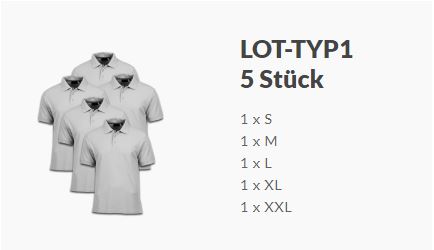
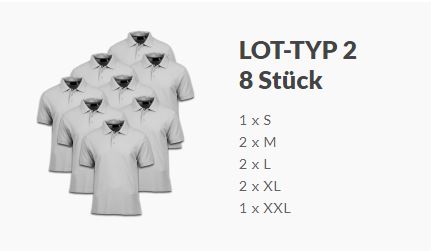
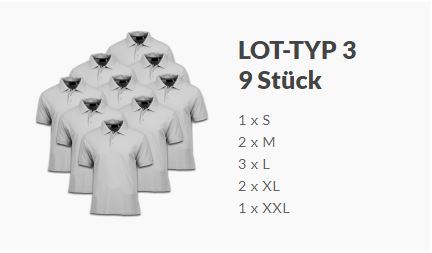
To reduce handling costs in the central warehouse, most retailers source their goods in fixed packing units, known as lots (in textiles). As a rule, there are at most a handful of different lot types per item.
The standard type contains each size once. Other types differ in how the sizes are distributed, so that popular sizes can be ordered in larger quantities.
How the allocation works
The relative demand of each store compared with the other stores is calculated automatically for every item, based on historical sales data. These ratios are then converted into absolute quantities.
Let's talk about your data
Tell us about your challenge. In a first conversation we will work out whether and how your problem can be solved with data.